

The biggest challenge parents face with every sunrise is getting their kids out of bed and taking them to the bathroom to brush their teeth. But what kids do is simply amazing. They hide deep under their quilts and hide their faces in their bed cushions to avoid waking up to brush their teeth. This is a daily routine for both parents and children.
We believe that brushing teeth should be a simple routine that kids enjoy. Brushing teeth should be like adding that sparkle of energy and happiness as they start their day on a joyful note. It is upsetting that many parents have to struggle with daily negotiations that continue with tears, excuses, and the most dramatic performances by children that are worthy of awards.
How do you get your child to brush his teeth without any of this melodrama?
The answer to this question is adopting a unique approach that inspires the kid to welcome brushing instead of dodging the toothbrush.
Remember that brushing need not be a real-life battle for you and your child. Add a spice of creativity to change this daily challenge into something your child actually awaits daily and looks forward to.
Add fun and playfulness to your child’s daily activities; you won’t regret adopting this thumb rule. Let’s gear up to explore these simple yet playful strategies that form the basis for strong lifelong dental habits with no space for power struggles.
A survey was conducted by the Journal of Global Oral Health to determine whether kids resisted brushing their teeth and to explain why children may avoid brushing.
A cross-sectional survey of parents of preschool children found that the most common reason children resist toothbrushing is their uncooperative behavior.
The results were:
From this survey, it is clear that children are aware of the importance of oral hygiene, but they resist brushing because of the discomfort they experience while brushing. Many kids dislike the sensory aspects or simply refuse due to mood swings and unwillingness.
This survey also delivered highly important information about brushing in children.
Check out the following graph:
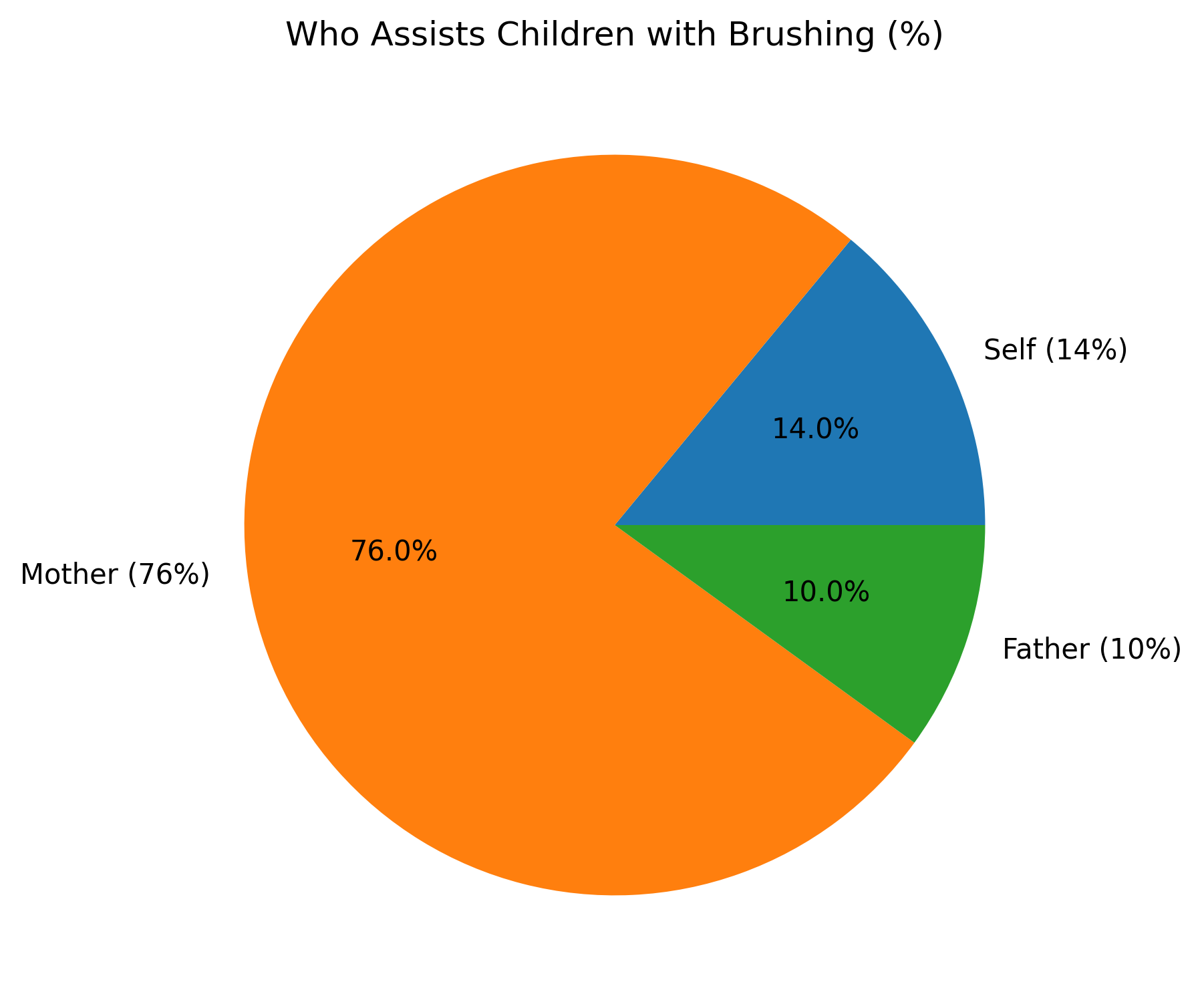
From a survey done on 100 children between the ages of 3 and 5 years:
Parents deal with kids refusing to brush their teeth day in and day out. But this fact is more common than you think. Hence, take a deep breath and keep calm.
There are several reasons why young children often struggle adapting to regular brushing:
Toddler brushing problem is not about being rebellious, but about your child’s wish to be in control of this habit. That is where consistency comes into play.
A clean and beautiful smile cannot undermine the importance of oral hygiene for kids. Children love sweets, candies, and chocolates. Eating too much of these sugary items compromises their dental health, resulting in cavities, gum infections, and long-term dental complications. Teeth are precious; clean, bright, and white teeth add value to your smile. Hence, developing healthy oral habits early can offer a life free from dental problems.
The right kind of dental care for preschoolers adds confidence in children. Make sure that kids grow up with healthy and disciplined routines, making them aware of their bodies naturally.
Your goal isn’t to achieve perfection for your kids. Your goal is to gently build consistency and resilience into their lives.
Every child dreams of becoming a superhero. Most parents are aware of which superhero amazes their child. Put his secret imagination to play. Use his simple brushing teeth game for kids to transform resistance into excitement.
Just tell him to imagine that his nightdress is no ordinary piece of cloth. It changes to a superhero suit with every sunrise, filling it with superpowers.
Instead of saying, “Time to brush your teeth.”
Say, “Quick. The cavity monsters are attacking. Pick up your magical brushing weapon, arm it with your favorite toothpaste, and attack back on the cavity monsters.”
Just a slight change to what you say, and the miracle will be on its way. Suddenly, brushing becomes a superhero brushing game. Your child is not just cleaning his teeth. He is actually enjoying the superhero brushing game to kill the germ and cavity monsters.
To add superhero charm to his day, create other fun brushing activities like:
What we discussed here might sound funny, but it will work beautifully when making brushing fun for toddlers and preschoolers. For toddlers and preschoolers, imagination feels and sounds real. Use stories as powerful motivators for your child.
When stories speak your child’s language, the mission automatically gets accomplished.
For a child, dentists suggest brushing for two minutes each morning.
But how can you decide on a 2-minute brushing timer for kids?
You can add a rhythmic brushing song. This rhythmic brushing teeth song for toddlers must last for 2 minutes. Play it and brush until the song ends. Morning music entertains and energizes the child. It also adds predictability and reduces resistance to brushing. For parents, the task becomes easier.
Let the child pick his goal for the day. Turn brushing challenge for kids into a musical expedition. Challenge him, “Can we finish before the song ends?” or “Can we reach all the back teeth before the timer goes off?”
If the child follows such daily goals, he will achieve consistency. This consistent process will build a safe and steady brushing routine in your child. When the outcome is predictable, children cooperate easily. Once the routine becomes regular, your child will apply this consistent and disciplined approach to other tasks he does during the day, which is indeed amazing.
Sometimes resistance implies the thirst for having control.
The best way to help children make small decisions is to offer them simpler choices. These simpler choices will encourage toddlers to brush teeth and also make decisions about other tasks. This process will teach them to consider various perspectives before making their own decisions. Independent thinking will be close by.
Offer them choices like:
These tiny decisions might sound funny and insensible in the beginning, but they actually foster independence in toddlers. When children feel respected and their choice appreciated, the power struggle will be gone forever.
Letting them make their own toothbrush choices for kids gives them ownership. Ownership creates cooperation, aligning with strong positive parenting techniques. Your approach should not be to force your child, but to guide them into making decisions. These small moments of independence are precious. They build confidence in your kid beyond the bathroom.
Similar Blog: Essential Tips To Navigate Parenthood For The First Time
You can’t compel your kid to perform a task, but modeling the same before him is indeed a great way to motivate the child because they copy what they see. When they see the parents brushing their teeth twice a day, kids become a part of that family routine.
Why expect your child to brush alone? Simply start brushing your teeth with kids. This will remove the feeling of isolation. Brushing time is an opportunity; turn it into a family ritual and see your child carry that happy feeling everywhere.
More than an opportunity, a shared family brushing routine helps bond the family. Instead of making them feel alone, stand next to them, support them. During this family ritual, make silly monkey faces in the mirror. Make funny sounds and count the monsters killed together. Let the kids score more than you.
Modeling good habits is always preferable to lecturing your child. Modeling is the natural and strongest parenting tool to begin teaching kids healthy habits. Over time, you would experience that brushing is normal for you as well as your child.
From the same survey conducted by the Journal of Global Oral Health, another truth was revealed.
The concern was, "How many times do children brush their teeth?”
First, refer to the following graph:
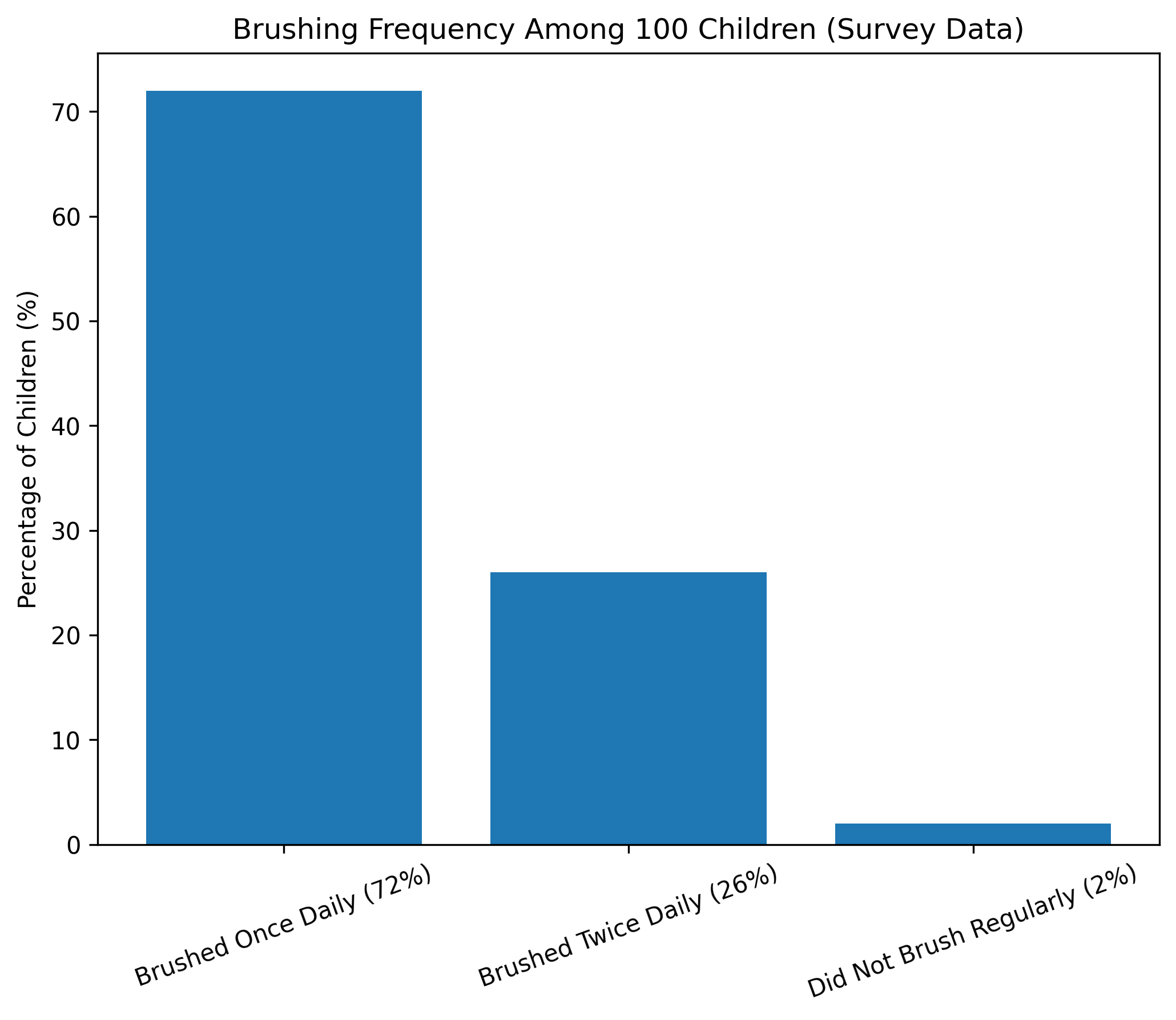
The above bar chart represents the brushing frequency among 100 children:
This graphical representation shows a lack of awareness about the importance of dental hygiene in parents and children.
Now that you have seen that children are reluctant to brush their teeth for the 2nd time, parents need to adopt a structured approach.
One of the most important aspects of successful parenting is predictable outcomes. A predictable bedtime routine for kids is more than entertainment. It secretly reduces anxiety and resistance in children even without them knowing it. Anything that’s done consistently and has predictable results instills discipline in children. For example, if brushing happens at the same time each night, it becomes an automatic family ritual. And the amazing part is that children continue this routine throughout their lives.
To make the sleeptime routine much more engaging, add the following to your toddler's bedtime schedule:
A disciplined and steady brushing before bed routine promises uncompromised oral health and a lifetime of cleaner teeth. The family brushing ritual is just the beginning of healthy routines. Let these routines form the foundation of broader healthy habits for preschoolers.
Always remember that children feel safe, confident, and thrive well in structured environments because consistency is essential, while intensity or compulsion aren’t.
Children are an extended version of their parents. Just like adults, children also love being appreciated. Hence, applauding them through rewards will bring in a major change and appreciable difference in their attitude and behavior. They will start looking at challenges as opportunities and not hurdles in life.
Prepare a simple-looking reward chart for brushing teeth. Add relevant stickers to make the chart look appealing and motivate your younger magician. This chart isn’t to achieve perfection but to focus on efforts and appreciate the child’s journey.
This brushing habit chart also tells how consistent your child is. When you see him driving for consistency, celebrate his small wins.
Praise him like:
“I noticed how carefully you brushed the back teeth.”
Your praises will work as powerful positive reinforcement for kids, building their motivation.
If you seriously want your child to think and work independently, never create dependency. Your efforts should support motivation for toddlers until their habits become a part of their personality naturally.
With time, your child begins to understand the importance of regular routines. You can now comfortably phase out the rewards, yet the routines remain in place.
In a few cases, you might see resistance against regular brushing in children going deeper, so do check if your child is experiencing any of the following symptoms:
If your child is in agony, you don’t need to panic. Simply consult a pediatric dentist for toddlers to know the root cause of their problem, followed by a solution.
Because teeth play a vital role, you must ensure a regular child dental checkup. A regular visit will rule out underlying issues like tooth sensitivity in kids or early dental problems in preschoolers. Solutions suggested by your pediatric dentist will save your child from discomfort and painful situations.
Despite taking adequate care and precaution, parents must never hesitate to accept professional guidance for added clarity. Earlier intervention is always better. It will help in preventing long-term complications.
Are you and your child at war with oral hygiene? Brushing is both an art and a science that shouldn’t feel like a fight. With imagination, structure, and empathy, you can turn it into a positive daily ritual.
Healthy habits start early. They grow even stronger in environments that value structure, emotional security, and consistent guidance.
If you are looking for a preschool that supports structured routines, emotional growth, and overall child well-being, Bloom Learning Centre offers the right learning environment that reinforces daily habits naturally.
Create confidence with small daily wins. Celebrate healthy smiles tomorrow.