

A confident child does not fear the world. They learn how to face it with awareness, courage, and trust in themselves.
During our parent-teacher meetings, many parents complain that their child hides behind them, avoids eye contact, or stays silent when surrounded by strangers, which is a matter of concern. This ambiguous position that most parents face isn't new. The simplest explanation for this situation in children is a lack of confidence in them when communicating with people around.
Confident communication is not an inborn talent, and many children miss it. But the good news is that this life skill can be learned and developed through emotional support, daily practice, and correct guidance.
The day when your toddler begins going to his school, he starts meeting teachers, neighbors, shopkeepers, classmates, caregivers, and new social groups. If you thought that talking to so many people would be a challenge for your child, then you are highly mistaken. Lack of confidence is generally an outcome of unknown fear in children. Such children mostly shy away from people to avoid communicating with them.
Hence, the first thing parents must do is break this fear and help children communicate confidently with strangers. Teach your child that there is no harm in approaching someone, greeting them, and talking politely with them. Make your little one understand that he needs to express himself calmly, safely, and respectfully, and that fear has no place in decent communication.
If you want to dive deep into understanding how small everyday habits can create that inner confidence, emotional resilience, and communication strength in your child, then this guide is for you.
As discussed above, a lack of self-confidence is the outcome of fear, but where did this fear come from? It is that feeling of insecurity or feeling unsafe with someone that results in fear.
Hence, before teaching any skill to your kid, your first job is to make him feel safe, because a child's confidence outside the home begins with his emotional safety at home. It has been seen that children who feel emotionally secure experience superior growth. They naturally start speaking, expressing, and connecting with others, and all this happens without fear.
Isn't it what you want your child to experience?
If you want to break that fear barrier, adopt a simple approach where you listen patiently to your child, validate his emotions, and avoid making harsh criticisms. This approach will help children slowly gain confidence and start trusting their own voice. Over time, you will witness a substantial improvement in your kid, and you won't need to correct him constantly. It won't be necessary to label him as a shy child or compare him with others. This magnificent approach will save you from quietly damaging their self-esteem and self-image.
During these early years, it is more important for parents to establish a strong emotional bond with their child. This bond will not only give the child inner stability but also unwavering confidence that will inspire resilience in him. When the child receives respect at home, he automatically understands that his thoughts and feelings are important and that they matter. This beautiful foundation offers emotional support that's vital for child confidence-building and improved emotional security in children.
Parenting children for self-confidence isn't that easy. It requires both parents to be calm, positive, patient, and compassionate in their behavior and communication with children. Make sure to communicate in a soft and natural tone that doesn't create fear or hesitation in the child.
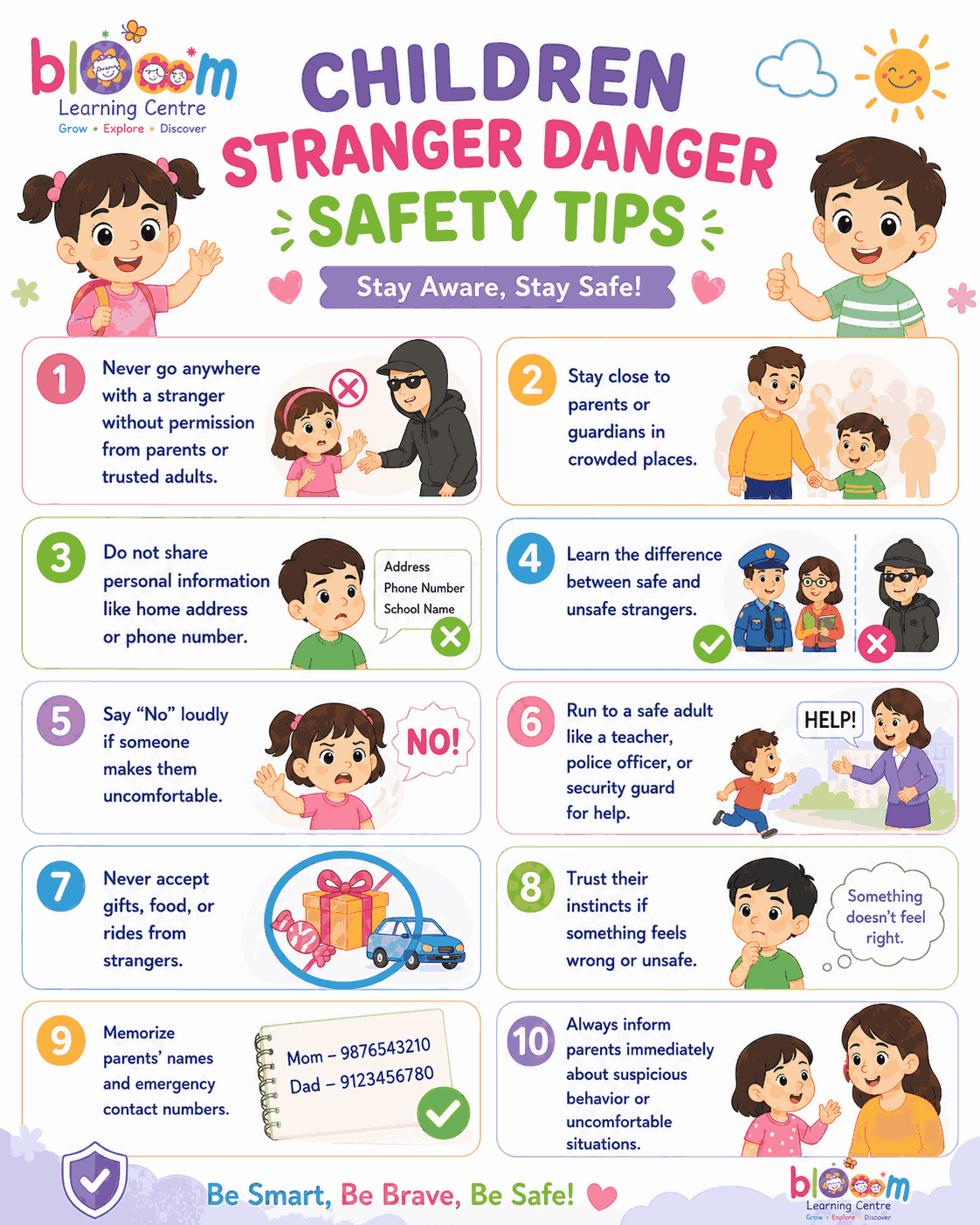
While teaching your child to stay confident when dealing with strangers, it is essential to develop the necessary awareness that will keep them safe. Make it clear from day one that communicating with confidence is great, but it does not mean that the child should trust every stranger they interact with. Hence, awareness is necessary.
As educated parents, you must introduce the idea of Identifying Safe and Unsafe People for Your Child. Safe strangers comprise police officers, teachers, security guards, store helpers, or other trusted adults. Let the child know that these people can be of help during emergencies.
Similarly, unknown people offering gifts, candies, or toys; people pretending to know the child's parents; people asking a child for help with lost pets; and people who make a child feel uncomfortable, scared, or pressured fall in the category of unsafe strangers, and the child should remain away from them. Their body alarm mechanism enables the kid to identify safe strangers and helps them trust their body instincts. These body instincts will aid the child in safeguarding themselves from unsafe people and situations. This concept clarity will improve the child's safety awareness and help him stay calm and emotionally strong even in unfamiliar situations.
Role-plays are an excellent way to simplify this learning process. All it needs is a little imagination to create simple situations at home. Explain to children to practice asking for help, introducing themselves politely, or responding carefully to unknown people. Parents can take up the role of safe strangers and unsafe strangers and ask the child to deal appropriately with each character.
Children should also learn important safety habits, such as:
Teaching children stranger-danger safety tips helps them stay calm, prevents unnecessary fear, and encourages them to communicate mindfully. When you see your child growing emotionally stronger, it is a milestone.
Nothing can be achieved overnight. It takes dedication and hard-earned efforts to create a landmark in life. Like adults, a child can gain their confidence by regularly performing repeated small tasks. Parents shouldn't expect their child to suddenly become socially confident, because it takes time based on the child's understanding of the situation and inner personality. It takes perseverance and patience on the part of parents to ensure that the child feels comfortable while performing regular interactions.
Involving your child in performing simple daily conversations will bring in a major change and make a huge difference to how he accepts the outside world. Parents should encourage their child to:
The greatest benefit of this everyday exercise is that the child easily overcomes his hesitation and fear. Over time, it becomes easy for your child to recognize and understand the stranger's tone. Based on this understanding, the child can decide their way of communication. He additionally begins to develop good listening skills, understand facial expressions, and judge the body language of the opposite person naturally.
There is nothing perfect in this world, and the true beauty lies in imperfection. Hence, it makes sense to focus on the child's efforts rather than opting for perfection. Appreciate your child for their small attempts. Your appreciation will make them understand the true value of dedicated efforts. In this way, parents and teachers can elevate the child's confidence and help shy children talk without creating unnecessary pressure or compulsion.
Parents should also remember that confidence development is a gradual process. It depends on the individuality of the child and their upbringing. Hence, a few children open up quickly, while others need time to take their first step. Gentle encouragement works far better than pressure. Building true confidence starts internally before it becomes visible externally.
When the child repeats the same exercise, he is exposed to the same scenario again and again. This routine builds confidence, removes fear, and strengthens communication skills in kids. This regular exposure routine is also an appreciable strategy to naturally improve social confidence in children and teach them the best practices of life.
To win at a challenge or a game, you need two things: a winner's mindset and ample practice. Communicating confidently with strangers is nothing less than a major challenge for your child, for which he needs ample practice.
Here, pretend play or role play is an essential practice that effectively builds confidence in your child. With confidence and determination, your child feels emotionally safe and starts communicating without fear of failure or judgment.
Parents can perform role-play activities with children. Go ahead and try:
These role-play activities look playful and sound funny, but have a miraculous effect on a child's mindset. These activities prepare them for real-life challenges without getting disheartened. Parents can combine their creativity with the child's imagination to rehearse responses. Doing so will help children slowly become accustomed and comfortable while interacting with others.
This fun-filled role-play activity has a hidden benefit that many parents don't know. They significantly reduce anxiety in children and help them stay happy and cheerful throughout the day. Such cheerful children often communicate more freely during play because there is no pressure to "perform correctly or perfectly."
Make sure to set up regular role-play activities for kids. These plays not only improve emotional readiness but also support healthy communication development in kids.
When it comes to in-house activities, there is nothing more beautiful and exciting than storytelling games and pretend conversations. Both have the power to make learning enjoyable and communication fun-filled for little toddlers. Children gain confidence and courage to face this world without force or pressure.
Children who still lack confidence and fear the outside world find it difficult to express their emotions clearly while communicating with others. On the other hand, those children who are emotionally strong and know how to express their thoughts and feelings clearly do not fear anything while communicating with strangers.
Because children are tender at heart, it is the responsibility of parents to make them feel understood, valued, and emotionally secure. They should also motivate children to share opinions, reveal their preferences, and talk about what they feel openly at home. These may sound like small habits, but they naturally strengthen communication skills in kids and also inculcate resilience in them, which will be their best support system when they grow.
To empower their communication skills, do the following:
When parents give undivided attention to their children and make them feel heard, they naturally flash the most beautiful smile ever. With undivided attention and unconditional love, parents can help their children become more socially aware and comfortable. Taking such a stand directly supports teaching children self-expression and improving healthy communication skills in them.
When you take an emotionally balanced stand and communicate comfortably and clearly with strangers, you experience less social anxiety. The same is true with children. With regular practice, children gradually become experts at explaining and expressing their feelings. They ask questions without fear and handle conversations calmly. Strong communication abilities have been found to strengthen emotional intelligence in kids. They help children build resilience, empathy, and emotional awareness.
"A child who understands emotions communicates with greater confidence and maturity."
It is quite common in most households to see parents speak on behalf of their children every time. This habit might seem harmless, yet it unknowingly weakens the child's confidence. When asked, the child doesn't get a chance to express his thoughts or views. This act not only makes him angry and unhappy but also shatters his self-confidence, which is essential to help him communicate flawlessly with strangers. Parents, out of love, overprotect their child. But the habit of overprotection actually curbs the child's opportunity for social growth.
Parents, on the contrary, should step back and allow children to answer during simple situations.
Allow your child to:
Children are free birds, and overwhelming them with multiple challenges and demands makes zero sense. Children need time to understand situations and build necessary confidence. Parents can stay patient and give the child the desired space to think and respond independently. In this way, the child will learn to think logically, consider various aspects, and respond with maturity.
Providing children with small independent moments is an appreciable approach. This approach will not only strengthen the child's self-belief but also amplify his independent communication skills. This approach will also help parents raise confident children. Over time, children will reach a level where they will begin trusting their own voice and start looking at things and situations from fresh new perspectives. For all this magic to happen, your child needs repeated practice, genuine guidance, and undivided support.
Overprotective parenting has long-term negative outcomes. Hence, a decent idea is to stay away from it and offer your child an environment that fosters healthier communication habits in kids for their long-term emotional growth.
Appreciation is the simplest yet the most effective way to inspire a person. Children also expect their parents to appreciate their efforts, regardless of the outcome. Hence, each word of praise influences children in a great way. The moment you say, "You spoke confidently today," will create a more positive and lasting effect on the child than just saying, "You are brave." The phrase "You are brave" doesn't feel that soulful.
Instead of focusing on the results, always concentrate on the child's efforts because without dedicated efforts, there is no result. When your praise is effort-based, children understand that there is no substitute for hard work, which comes through regular practice. How big the efforts are is not important, but how honestly your child tries is above all the results. Hence, parents should appreciate small social efforts to keep the child cheerful and motivated.
Appreciate them for:
Your encouragement and appreciation should always carry a strategic angle. They should inspire a growth mindset for children and strengthen their emotional resilience.
Your words are a source of energy and motivation for your children. Your words build their confidence when you make them feel capable of doing things. Comparison has no place here because your child is unique. Regular doses of positive reinforcement motivate them to continue improving socially without fear of failure, criticism, and comparison.
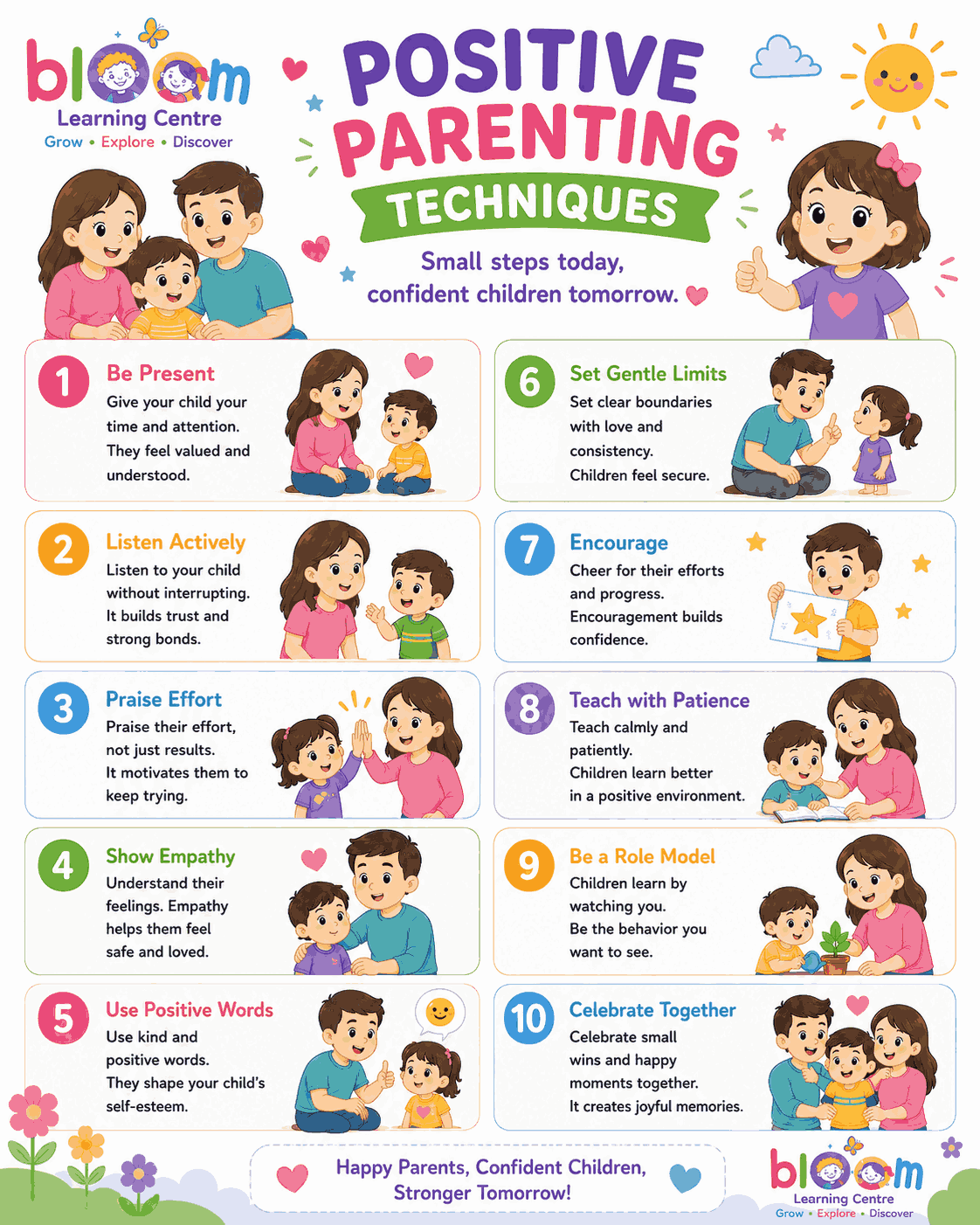
Positive parenting techniques are the best to build self-esteem in kids over time. When you support your child emotionally, they become healthy social risk takers and communicate independently.
If you closely observe, you will find that confidence and independence go hand in hand. When you allow your child to handle small tasks independently, they automatically develop confidence, and it is that same confidence that enables them to communicate naturally with unfamiliar people without fear.
Each child has a different capacity and unique strengths. Hence, encouraging the child to perform age-appropriate responsibilities will help parents understand the child's capabilities and measures they should take to help him become independent.
Children can begin with activities such as:
These are not just activities but real-world experiences. Performing these activities again and again improves the decision-making ability of the child, and he starts trusting himself. Along with these activities, children develop the skill of thinking independently. This skill is crucial for healthy emotional growth in children.
Why are these real-world experiences necessary? The main purpose of these experiences is to prepare kids to become emotionally strong, because they will need emotional strength at school, in friendships, and in future social environments. Tough real-world experiences make children tougher, which later translates into resilience. Developing independence and resilience at an early age will make your child mature as they grow and help them become a true support system for parents when they age.
Real-life learning helps kids communicate better. With regular practice, it not only builds their confidence through experience but also makes them calmer, more adaptable, and socially comfortable even in unfamiliar settings.
Confident communication is not about making children loud, fearless, or socially perfect. It is about helping them trust their voice, understand their surroundings, and express themselves calmly, with awareness and self-belief.
When parents create emotionally safe environments, encourage independent interactions, and teach mindful communication habits, children gradually grow stronger from within. Over time, this confidence extends far beyond conversations with strangers. It shapes how children approach challenges, relationships, setbacks, and opportunities throughout life.
A child who learns to communicate effectively becomes a courageous, resilient, and emotionally intelligent adult with unwavering self-trust.
Start with brief daily conversations, pretend play, and positive encouragement. Children gradually build confidence when they feel emotionally safe and supported.
Children can begin learning basic communication skills from toddlerhood through guided greetings, polite interactions, and safe social exposure.
Teach children, calmly, the difference between safe and unsafe strangers. Focus on awareness, boundaries, and safe communication rather than fear-based lessons.
Many children feel nervous around unfamiliar people because confidence develops slowly through emotional security, practice, and repeated social experiences.
Yes. Strong communication skills foster confidence, emotional intelligence, resilience, independence, and healthy relationships throughout life.